
 Uncategorized
The most important Digital Marketing tools and their role in the success of your digital campaigns
8 min readConfused about choosing the right tools for your digital campaigns? Discover the most important Digital Marketing tools to analyze results, study competitors, and improve your digital performance to reach your target audience efficiently
Digital Marketing tools have become an essential part of managing digital campaigns and analyzing their results. They help businesses reach the right audience, understand their behavior, and improve performance based on clear data. With the multiplicity of tools and the diversity of their functions, it may be difficult to determine the options that serve each activity appropriately. Therefore, understanding the types of these tools and the uses of each of them helps in building a more organized, integrated digital marketing strategy and investing budget and effort in a way that achieves measurable results.
What is Digital Marketing?
Digital Marketing is a set of strategies that rely on digital channels to reach customers, introduce products and services, and build an ongoing relationship with them with the ability to measure results and analyze audience behavior. These channels include search engine optimization (SEO ) , social media campaign management , email campaigns, websites, and e-stores, in addition to Digital Marketing tools that help manage campaigns, analyze performance, and improve access to the appropriate audience.
What are the best Digital Marketing tools?
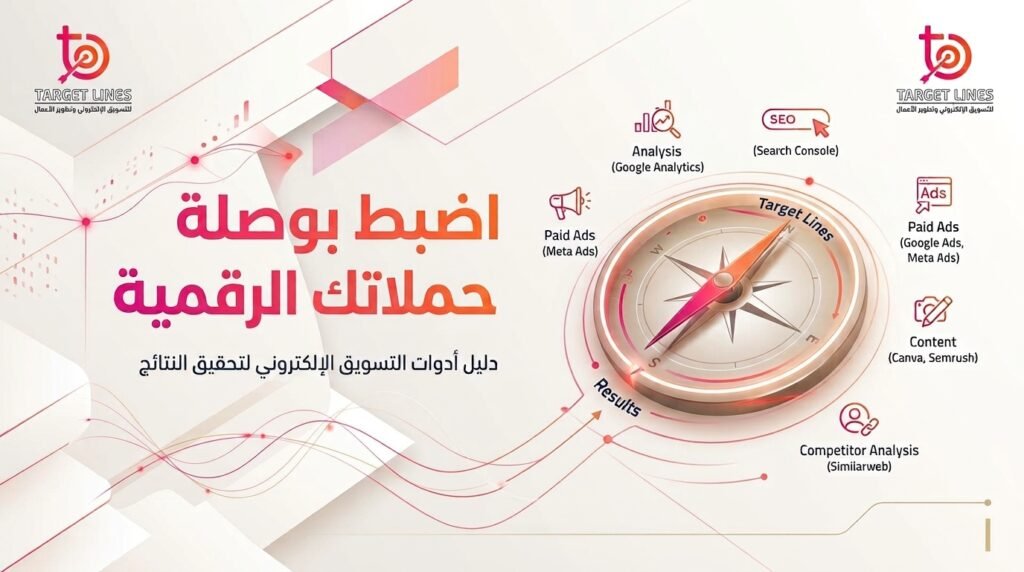
Digital Marketing tools vary according to the purpose of their use. Some of them help to analyze data, some of them support advertisements or improve appearance in search engines, the most prominent of which are:
Google Analytics
- Analyze website visits and user behavior.
- Measure traffic sources and conversions.
Google Search Console
- Monitor the site's appearance in search results.
- Word analysis and indexing problems.
Google Ads
- Create and manage PPC campaigns, target audiences, and measure conversions.
- Target audience and measure conversions.
Meta Ads Manager
- Manage Facebook and Instagram ads.
- Determine the audience and budget and follow up on the results.
Semrush
- Search for keywords.
- Competitor analysis and site ranking.
Mailchimp
- Create email campaigns.
- Manage customer lists and measure interaction.
These tools help organize marketing efforts and analyze results, which facilitates the development of campaigns according to clear data.
What are the most popular content marketing tools?
Digital Marketing tools help plan, create content, and analyze its performance. The appropriate tool varies depending on the nature of the content and the purpose of its use. Among the most popular options are:
Google Trends
It helps discover topics and words that are of interest to the audience, making it easier to choose content ideas related to users' interests and search trends.
Canva
It is used to design publications, images, infographics, and social platform content, and provides templates that help produce visual content in an organized manner.
Semrush
It supports keyword research and competitor analysis, and also helps discover content opportunities and topics that can be targeted to improve appearance in search engines.
Ahrefs
It provides tools to analyze keywords, links, and competitors and can be used to discover topics that attract traffic and build a more accurate content plan.
HubSpot
It helps organize content creation processes, manage marketing campaigns, as well as monitor audience interaction and measure content performance. In the end, choosing the appropriate tool depends on the goals of the [ marketing content creation strategy ] , the nature of the audience, and the channels used, and not just on the abundance of tools.
What are the most popular competitor analysis tools?
Digital Marketing tools designed to analyze competitors help understand their digital performance and discover the words, topics, and channels that achieve good results for them, the most famous of which are:
- Semrush: Analysis of keywords, traffic, competitors and digital ads.
- Ahrefs: Study backlinks, keywords and content that generate traffic for competitors.
- Similarweb: Compare traffic sources, digital channels, and performance of competing sites.
- SpyFu: Analyze keywords targeted by competitors in search and paid advertising.
- BuzzSumo: Discover competitors' most popular and interactive content across digital platforms.
Using these tools helps to form a clearer picture of the market and identify opportunities that can be employed when developing the marketing strategy.
What is the importance of Digital Marketing tools?
Digital Marketing tools help organize digital efforts and improve performance through clear data and measurable indicators.
- Campaign performance analysis: helps measure results and find out which campaigns and channels are most effective.
- Understanding the audience: Provides data on customer behavior, interests, and interaction with content.
- Improving digital visibility: Supports optimization of websites and content to increase reach via search engines.
- Efficient campaign management: Makes it easier to organize ads and content and track their performance from one place.
- Data-based decision making: Provides clear indicators that help develop strategy and improve results.
- Budget rationalization: It allows tracking spending and measuring returns, which helps direct the budget towards the most appropriate channels.
With the correct use of these tools, businesses become better able to understand their audience, develop their strategies, and improve their results.
What are the most important Digital Marketing tools for YouTube publishers?
Digital marketing tools help YouTube publishers understand channel performance, improve content, and reach their target audience more accurately.
- YouTube Analytics: Analyze video views, watch duration, traffic sources, and audience engagement.
- YouTube Studio: Manage the channel and videos, track comments, statistics, and content performance.
- Google Trends: Discover topics and words that are most searched for and choose suitable video ideas.
- Google Ads: Promote videos and reach a specific audience based on interests, location, and user behavior.
- Canva: Design thumbnails and visuals that help your video pop and attract clicks.
- TubeBuddy: Helps optimize video titles and keywords and analyze channel performance.
Combining analytics, content creation and advertising tools gives publishers the opportunity to grow the channel and make better decisions based on clear data.
What is the goal of Digital Marketing?
Digital Marketing tools help implement marketing objectives efficiently and analyze results. Among the most prominent objectives of Digital Marketing are:
- Reaching the target audience: Directing marketing messages to the customers most interested in the product or service.
- Increasing brand awareness: enhancing the brand’s presence and introducing the public to its products and services.
- Attracting Leads: Attracting new visitors and turning them into followable marketing opportunities.
- Increase sales: Support purchasing decisions and improve the chances of converting potential customers into actual customers.
- Building a relationship with customers: enhancing continuous communication with the audience and increasing interaction and trust.
- Measuring results and improving performance: monitoring the performance of campaigns and using data to develop the marketing strategy.
Thus, Digital Marketing combines accurate access to the audience and measurement of results in a way that supports the goals and growth of the activity.
How does Target Lines help you use Digital Marketing tools?
[ Target Lines Digital Marketing Company ] helps you choose and use the appropriate tools for the goals of your activity, through [ customized marketing consulting ] and a team that works as an in-house partner for your activity, starting from [analyzing the performance of digital campaigns ] and following up on the results to measuring the return on investment.
- Identify the right tools: Choose tools that match your goals and the channels used in your activity.
- Analyzing campaign performance: tracking results and discovering strengths and aspects that need development.
- Understanding audience behavior: Leveraging data to learn customers’ interests and interactions with content and ads.
- Improving the strategy: Using the results of the analysis to develop campaigns and content and improve budget distribution.
- Follow up on results: Continuously measure performance indicators to ensure that marketing efforts are consistent with activity objectives.
Customer inquiries about Digital Marketing tools
How do Digital Marketing tools help improve campaign results?
It helps analyze campaign performance and understand audience behavior, allowing content, targeting, and budget to be modified based on data and improving results over time.
How do you choose the appropriate Digital Marketing tools for your activity?
First determine your goals and needs, then choose the tools that support the nature of your activity and the channels you use, comparing ease of use, cost, and available features.
Are there free Digital Marketing tools?
Yes, free tools like Google Analytics, Google Search Console, and Google Trends are available and can be used to analyze search performance and improve digital exposure. In the end, Digital Marketing tools give businesses a greater ability to understand their audience, manage their campaigns, and measure their results based on clear data, and with the [Target Lines] team , these tools can be employed within [ integrated Digital Marketing services ] that begin by setting goals and choosing appropriate channels, then monitoring performance and developing campaigns according to the results. Thus, marketing becomes more organized and effective with greater clarity in marketing decisions and directing the budget towards activities that support the growth of the brand, improve its digital presence, and help the vision build a digital presence and achieve measurable results.